

Sourdough Discard Focaccia Made Without Yeast
This post may contain affiliate links. Read disclosure policy.
Sourdough discard focaccia bread is soft, fluffy, and full of rich olive oil flavor with a perfectly crisp, golden crust. This easy recipe is a great way to use up sourdough discard while creating a simple, delicious bread that pairs with just about any meal. With minimal effort, flexible timing, and without the need of active dry yeast, it is perfect for busy days when you still want something homemade.
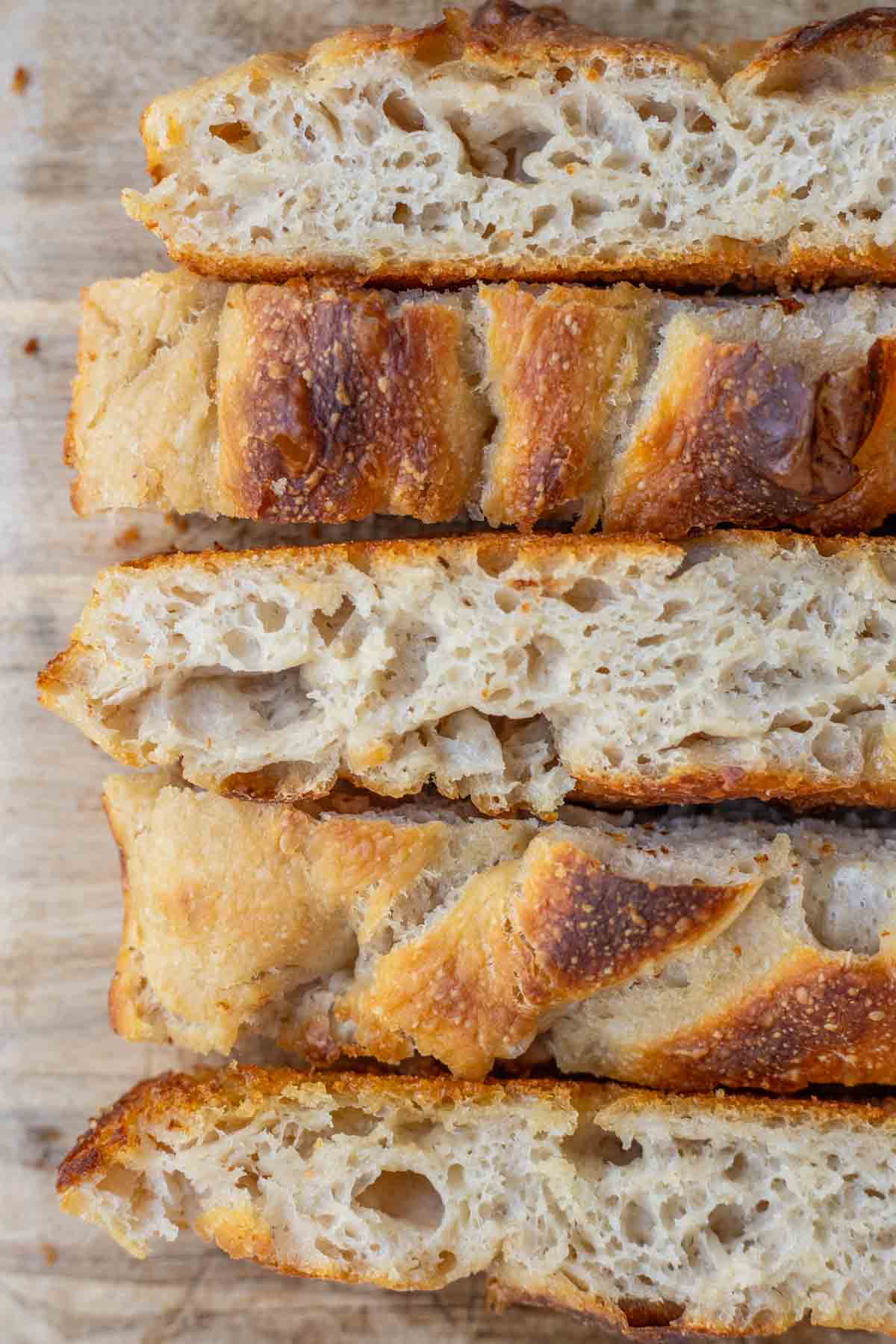
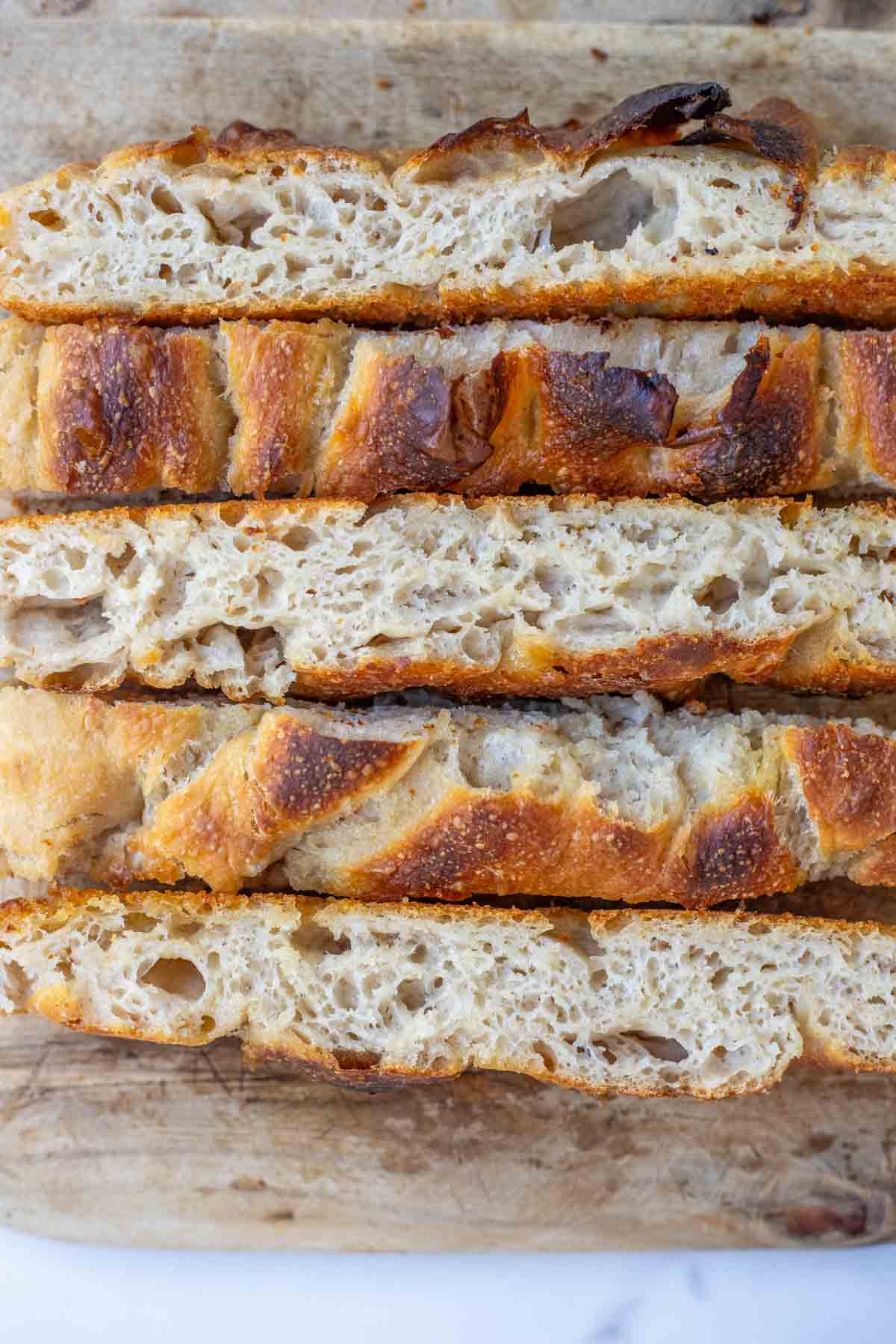
There is something about focaccia that feels a little special but is actually so simple to make. This easy sourdough focaccia recipe has quickly become one of my favorite go to sides when I want something warm and homemade without overcomplicating things. It has that light, airy texture with those signature bubbles, and the olive oil gives it the best flavor.
If you have made my unloaf bread before, you will notice this method feels very similar. It is simple, flexible, and does not require perfect timing.
I also love how versatile sourdough can be. Whether it is something sweet like my sourdough blueberry bread or a simple everyday loaf like sourdough whole wheat sandwich bread, there are so many ways to use your starter without wasting anything. This focaccia is one of the easiest and most satisfying ways to do that.
Why You Will Love This Recipe
This sourdough discard focaccia is:
- Made with simple ingredients and approachable
- A great way to use discard
- Soft and chewy crumb
- Perfectly golden and crisp on the outside
- Flexible with timing
- Easy to customize with different toppings
- No commercial yeast needed
- It is one of those recipes that feels impressive but is actually very low effort.
Why This Recipe Actually Works
Here’s the thing about sourdough discard: even when it’s been chilling in your fridge for a week, it still has active wild yeast and lactic acid bacteria hanging out in there. They’re sluggish, sure, but not dead.
When you give them flour, water, warmth, and time, they wake up and start doing what they were born to do, which is eat sugars, produce carbon dioxide, and create gluten-relaxing acids that make dough extensible and flavorful.
This recipe works because it builds structure through a series of folds rather than aggressive kneading.
Folding develops gluten gently, which gives you an open crumb without overworking the dough. The high hydration level (this is a wet, sticky dough) also contributes to those signature air pockets. Wet dough steams from the inside as it bakes, creating lift and tenderness.
Pro Tip: The discard used in this recipe must be an active and bubbly starter when fed and should have been fed somewhat recently. It can’t be a sluggish starter in need of help.
Ingredients Needed
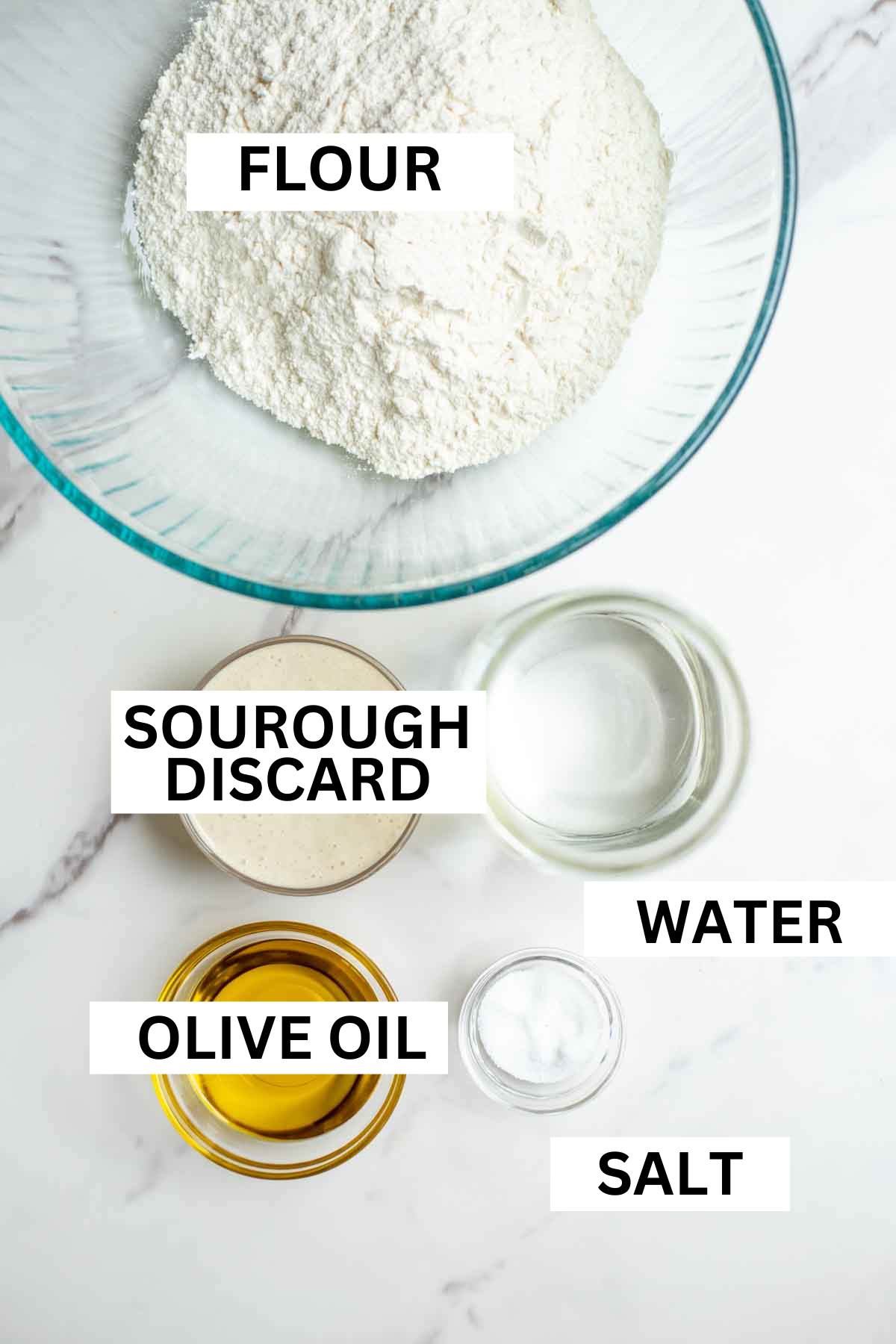
Bread flour: Gives structure and helps create that airy texture. You can also use all-purpose flour.
Unfed sourdough starter: Adds flavor and helps the dough ferment without needing an active starter (which you could use as well if you wanted). For the unloaf method to work, you must have a starter that has been fed recently and is healthy and active.
Water: This is a higher hydration dough which gives focaccia its signature texture
Olive oil: Adds richness and helps create that golden crust. Use a good quality olive oil since this flavor is prominent.
Optional add-ins. This is just the basic recipe. Turn it into pizza or a sweet treat.
Tools You May Need
Large bowl
How to Make Easy Sourdough Discard Focaccia
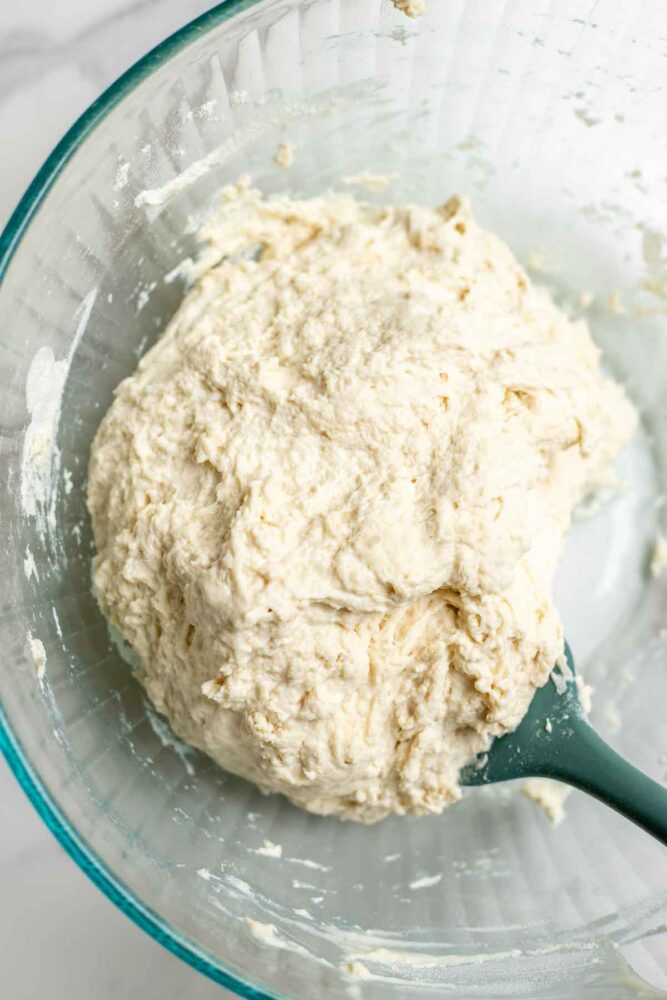
Step 1: In a large bowl, mix the flour, sourdough starter, water, and salt until fully combined and a shaggy dough forms. Cover and let the dough rest for 30 minutes.
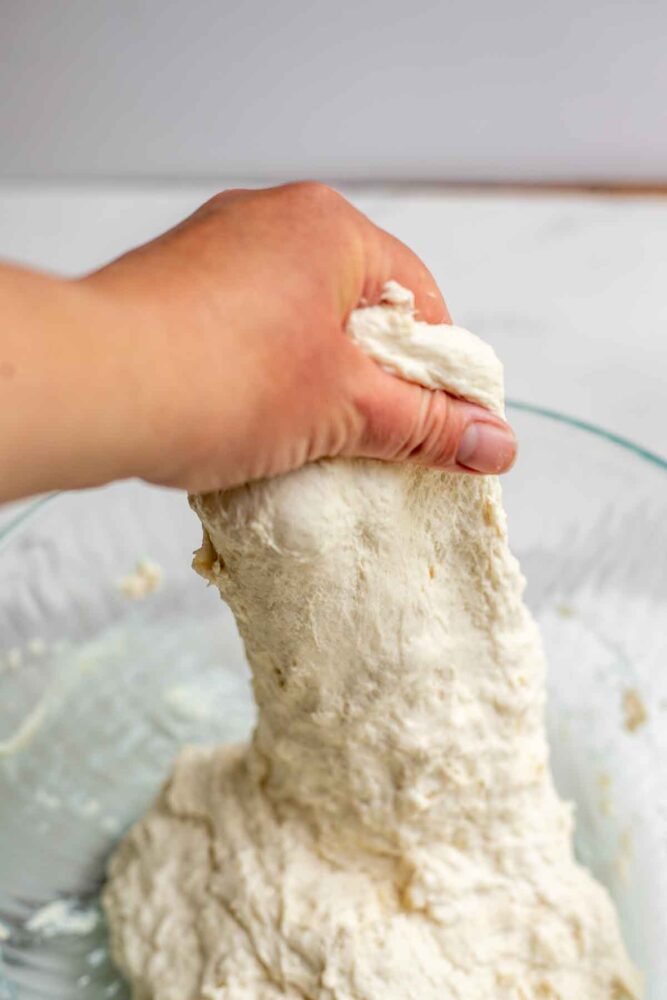
Step 2: Perform one set of stretch and folds (stretch and folds are optional, but gives the focaccia dough better texture). Wet hands if too sticky. Cover and let rest another 30 minutes, then perform a second set of stretch and folds.
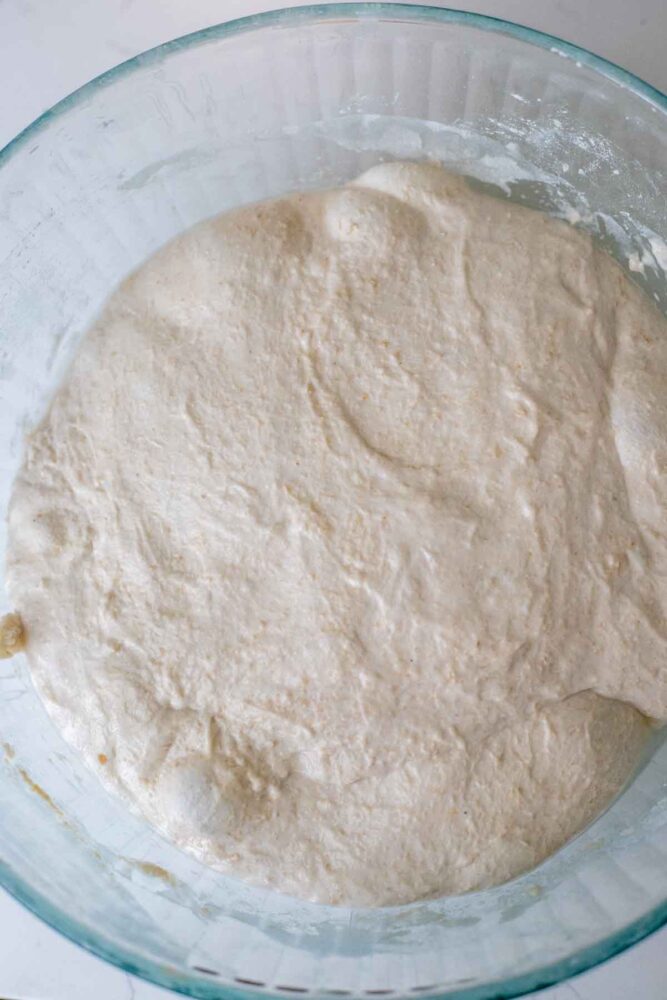
Step 3: Cover and allow the dough to bulk ferment (first rise) for 6 to 8 hours, or until it is very bubbly and has a soft, airy texture. Rising time with be dependent on how warm your kitchen is. The cooler the environment the longer it takes. Focaccia can handle being slightly over-fermented, which makes this recipe very forgiving.
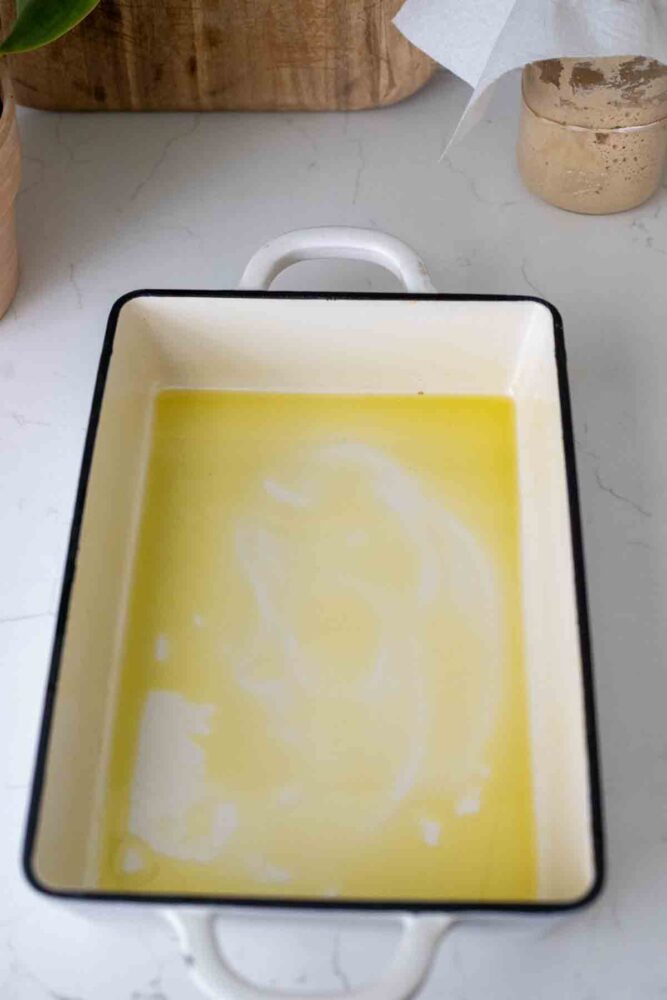
Step 4: Pour about 2 tablespoons of olive oil into a 9×13 pan and spread it across the bottom and sides.
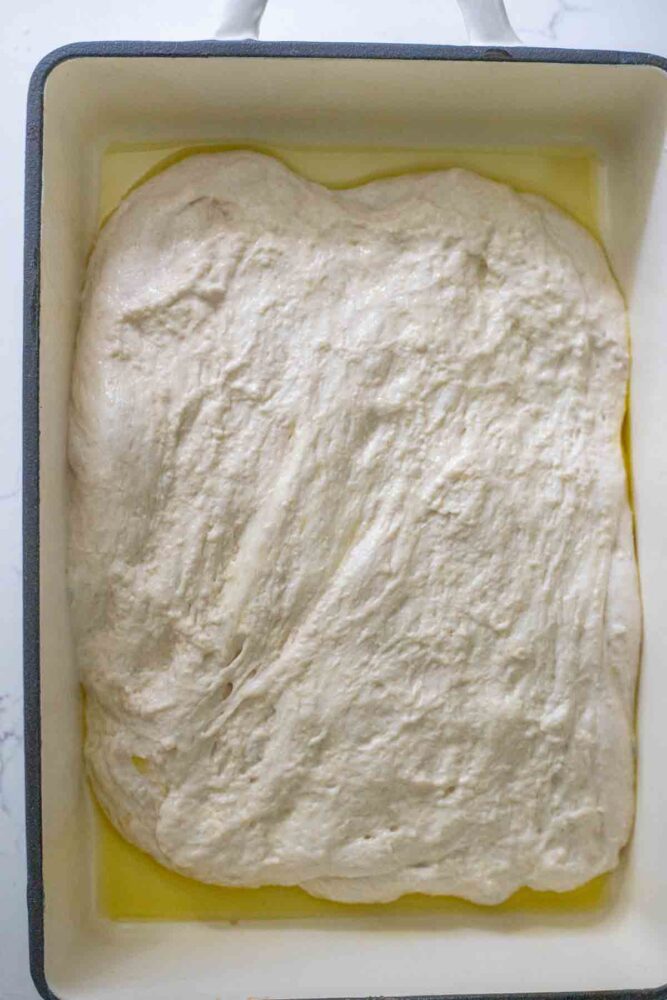
Step 5: Transfer the dough to the pan and gently spread it out with your hands. Cover and let rise for 1 to 2 hours, or longer if needed, until doubled and full of bubbles. You can also place it in the fridge overnight for a cold ferment and slower rise.
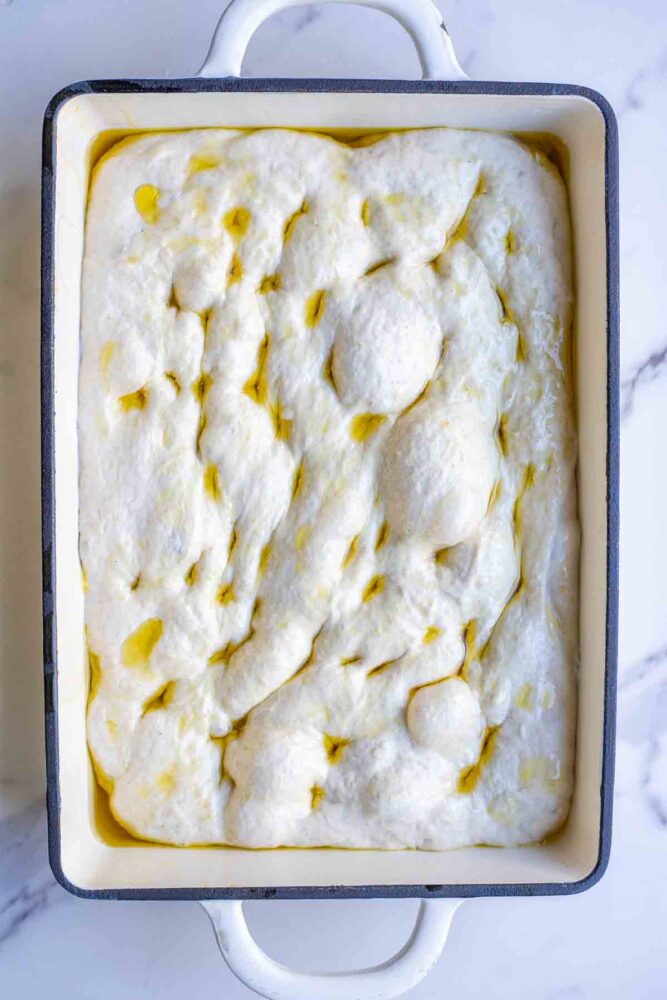
Step 6: Preheat your oven to 425 degrees. Drizzle the remaining olive oil over the top of the dough and use your fingers to press it in, creating those classic dimples. Add your favorite toppings.
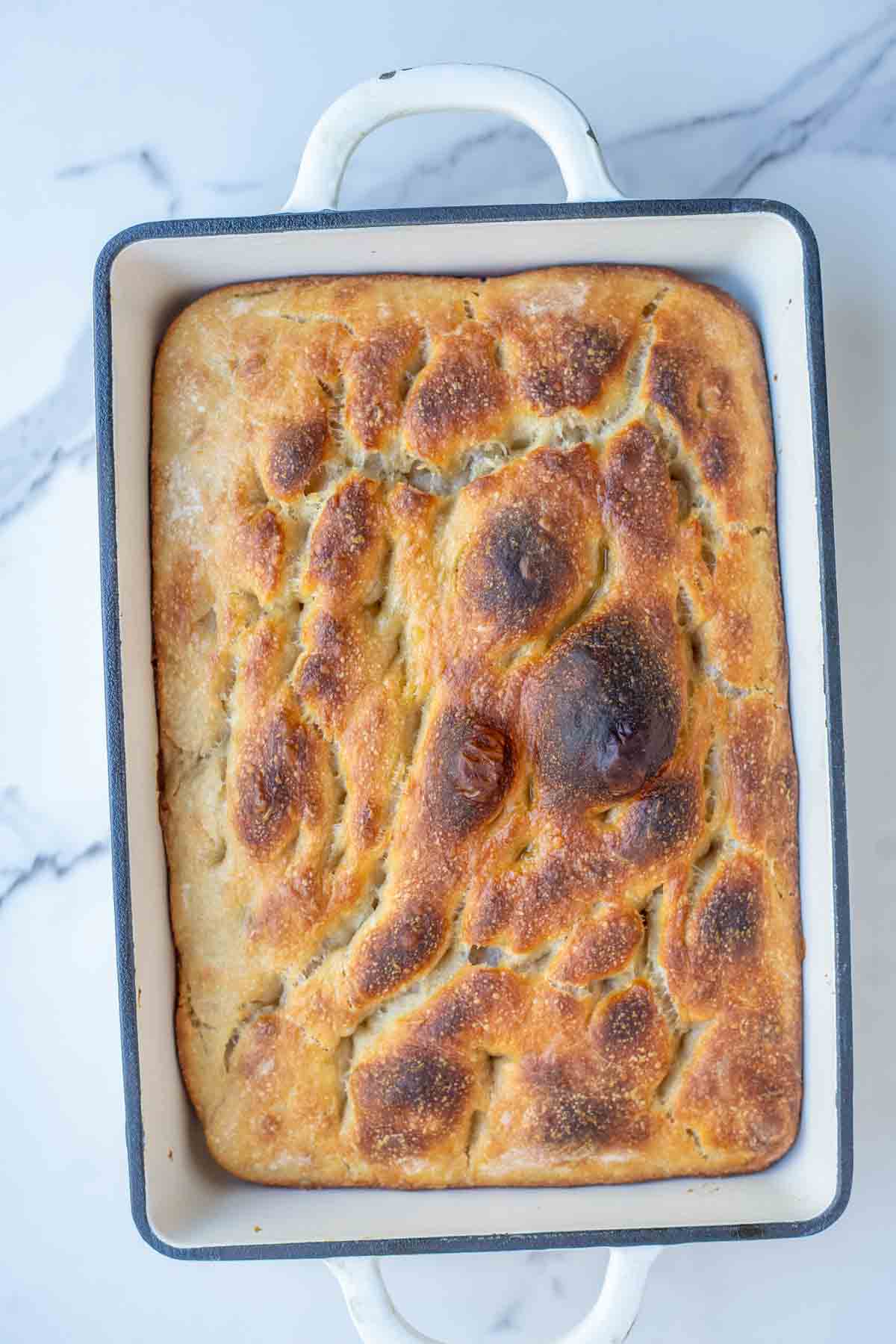
Step 8: Bake for 25 to 35 minutes, until golden brown.
Variations
You can easily change this recipe depending on what you have on hand.
Save This Recipe
- Add herbs like rosemary or thyme
- Mix in roasted garlic or carmalized onions
- Top with cheese for a richer flavor
- Add olives or sun dried tomatoes for something savory
Topping Ideas
- Flaky salt and fresh rosemary
- Garlic and olive oil
- Cherry tomatoes
- Caramelized onions
- Parmesan cheese
- Everything bagel seasoning
- Cinnamon Sugar
Tips
- Do not worry about perfect timing. Let the dough guide you. It should be giggly and bubbly. Focaccia is also one of those recipes that works well over fermented.
- Rise time will depend on temperature. If your kitchen is cooler, give it more time to ferment. If it is warmer, it will take a lot less time.
- Use plenty of olive oil. This is what gives focaccia its flavor and texture.
- Look for bubbles. That is how you know your dough is ready.
- This recipe also makes an incredible pizza dough.
- If you like a really tangy flavor, the cold ferment will help develop those flavors. I do find that, because of the use of discard, it already has a more sour flavor.
- This is a higher hydration dough so it is seems wet and sticky it is okay.
Storage
Focaccia is best the day it’s baked, but it holds up surprisingly well if you store it right.
Once it’s completely cool, wrap it tightly in plastic wrap, a zip-lock bag, or an airtight container. It’ll keep at room temperature for up to two days. The crust will soften, but the interior stays moist. To bring back some of that crispy texture, reheat slices in a 350°F oven for 5 to 7 minutes or toast them cut-side down in a dry skillet.
For longer storage, freeze it. Slice the focaccia into portions, wrap each piece in plastic wrap, then place them all in a freezer bag. It’ll keep for up to three months. Reheat from frozen in a 375°F oven for 10 to 12 minutes, or until warmed through and crispy on the edges.
Don’t refrigerate focaccia. The fridge dries out bread faster than leaving it on the counter. If you have leftovers and know you won’t eat them within two days, go straight to the freezer.
FAQ
Yes, but it is not necessary. This recipe works very well with discard.
Yes, you can let the dough rise in the fridge overnight before baking.
This is a high-hydration dough, so it will be sticky. That is normal.
They help build structure, but this dough is forgiving even if you keep it simple. They are not necessary, but useful.
Find More Sourdough Discard Recipes:
- Sourdough Discard Crackers
- Sourdough Peach Cobbler
- The Easiest Sourdough Discard Cinnamon Rolls Ever – 30 Minutes
- Quick Sourdough Discard Pancakes served with maple butter
- Lemon Sourdough Scones
If you try this recipe and love it, I would love if you could come back, comment on the post, and give it 5 stars! Please and thank you. Tag me @ablossominglife
Sourdough Discard Focaccia
Save This Recipe
Equipment
Ingredients
- 500 grams bread flour
- 150 grams unfed sourdough starter
- 400 grams water*
- 10 grams salt
- ¼ cup olive oil for pan
Instructions
- In a large bowl, mix the flour, sourdough starter, water, and salt until fully combined and a shaggy dough forms.
- Cover and let the dough rest for 30 minutes.
- Perform one set of stretch and folds (stretch and folds are optional, but gives the focaccia dough better texture). Wet hands if too sticky. Cover and let rest another 30 minutes, then perform a second set of stretch and folds.
- Cover and allow the dough to bulk ferment (first rise) for 6 to 8 hours, or until it is very bubbly and has a soft, airy texture. Rising time with be dependent on how warm your kitchen is. The cooler the environment the longer it takes.
- Pour about 2 tablespoons of olive oil into a 9×13 pan and spread it across the bottom and sides.
- Transfer the dough to the pan and gently spread it out with your hands.
- Cover and let rise for 1 to 2 hours, or longer if needed, until doubled and full of bubbles. You can also place it in the fridge overnight for a cold ferment and slower rise.
- Preheat your oven to 425 degrees.
- Drizzle the remaining olive oil over the top of the dough and use your fingers to press it in, creating those classic dimples. Add your favorite toppings.
- Bake for 25 to 35 minutes, until golden brown.
Notes
- Do not worry about perfect timing. Let the dough guide you. It should be giggly and bubbly. Focaccia is also one of those recipes that works well over fermented.
- Rise time will depend on temperature. If your kitchen is cooler, give it more time to ferment. If it is warmer, it will take a lot less time.
- Use plenty of olive oil. This is what gives focaccia its flavor and texture.
- Look for bubbles. That is how you know your dough is ready.
- This recipe also makes an incredible pizza dough.
- If you like a really tangy flavor, the cold ferment will help develop those flavors. I do find that, because of the use of discard, it already has a more sour flavor.
- This is a higher hydration dough so it is seems wet and sticky it is okay.